
Oil, Inflation and Interest Rates: What to Watch
Three charts explain the main risk in the oil market right now, and why it matters for bonds and stocks.
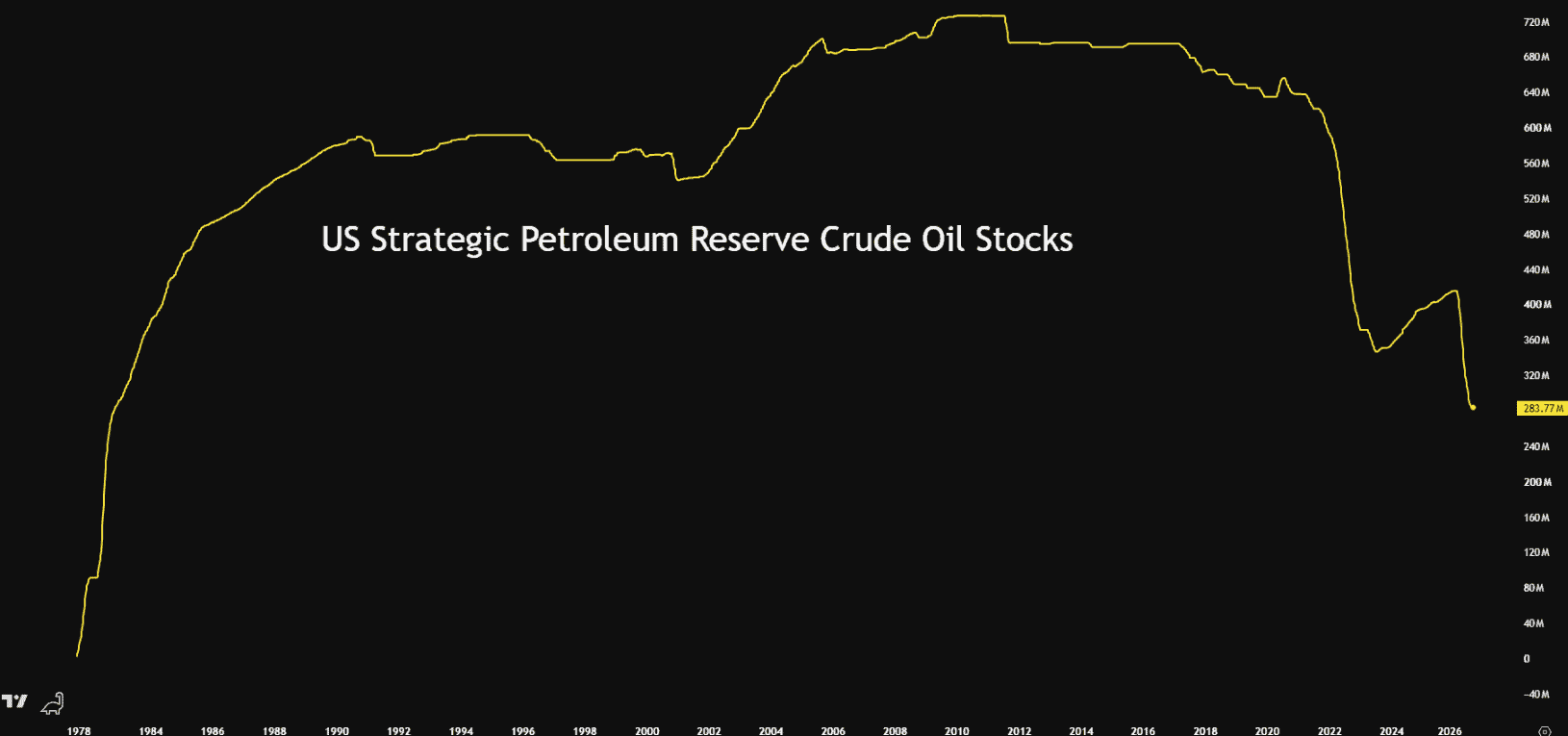
- The US emergency oil supply is running low
- What it is: The Strategic Petroleum Reserve (SPR) is the US government’s emergency stockpile of crude oil.
- What has happened: The government has been releasing oil from it to help hold prices down. The reserve is now about 284 million barrels, the lowest since the early 1980s.
- The latest move: On Friday, the G7, the group of seven large, developed economies including the US and Canada, agreed to release up to 100 million barrels of oil and diesel from their emergency reserves over the next four months.
- Why it matters: This should help ease fuel prices in the short term. But every release leaves less in reserve, and less the governments can do to cap the next jump in oil prices.
- Fuel prices are still trending higher
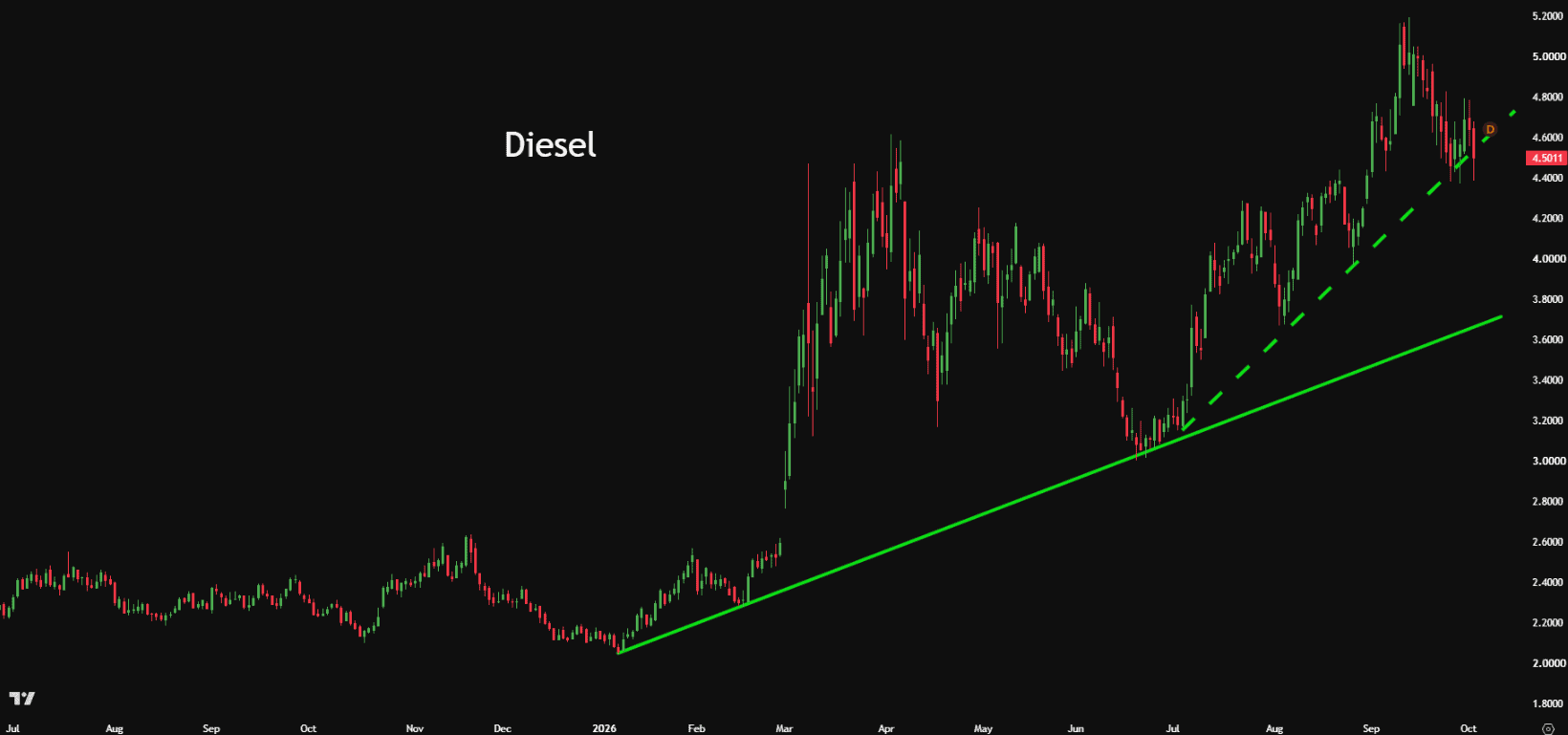
- Diesel: Diesel futures are near $4.50 a gallon, more than double the level at the start of the year. Diesel moves trucks, trains and farm equipment, so it feeds into the price of almost everything.
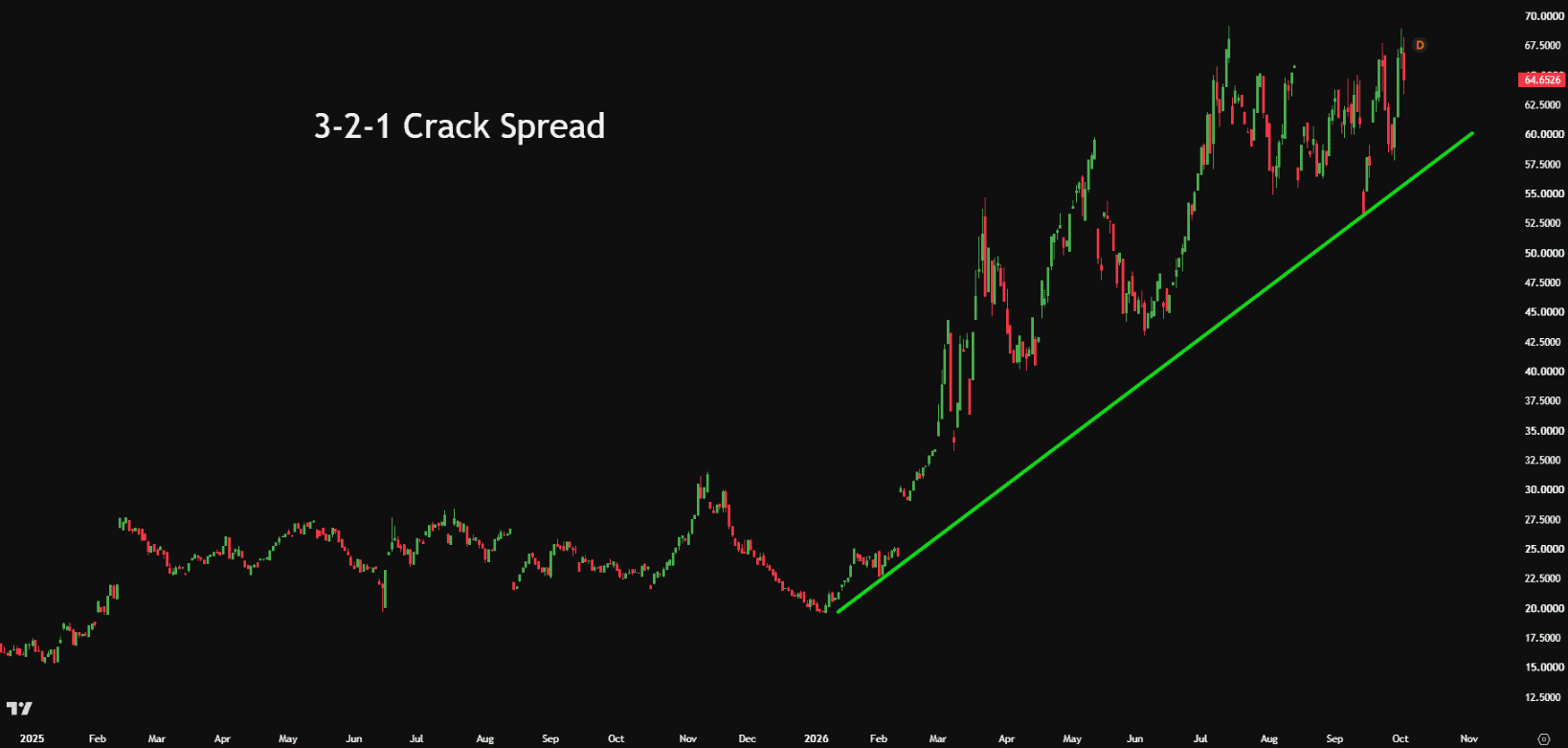
- Crack spread: This is the gap between the price of crude oil and the price of the fuels made from it. Think of it as the refiner’s profit margin. It has tripled this year, to about $65 from $20.
- The test: The G7 release is aimed squarely at diesel. The next few weeks will show whether it is enough to turn these two charts lower.
- Signs it is working: Diesel is sitting right on its short-term trendline (dashed). A break below it, and a crack spread drop below its rising trendline near $58, would say the pressure is easing.
- Signs it is not: The crack spread has hit the same ceiling, just under $70, three times since July. A move above that level, or diesel back above its September high near $5.20, would say the release was not enough.
What we are watching: The crack spread. A break above $70 would signal more inflation pressure ahead. A drop below its trendline near $58 would be the first sign the G7 release is working.
- Why bond investors care
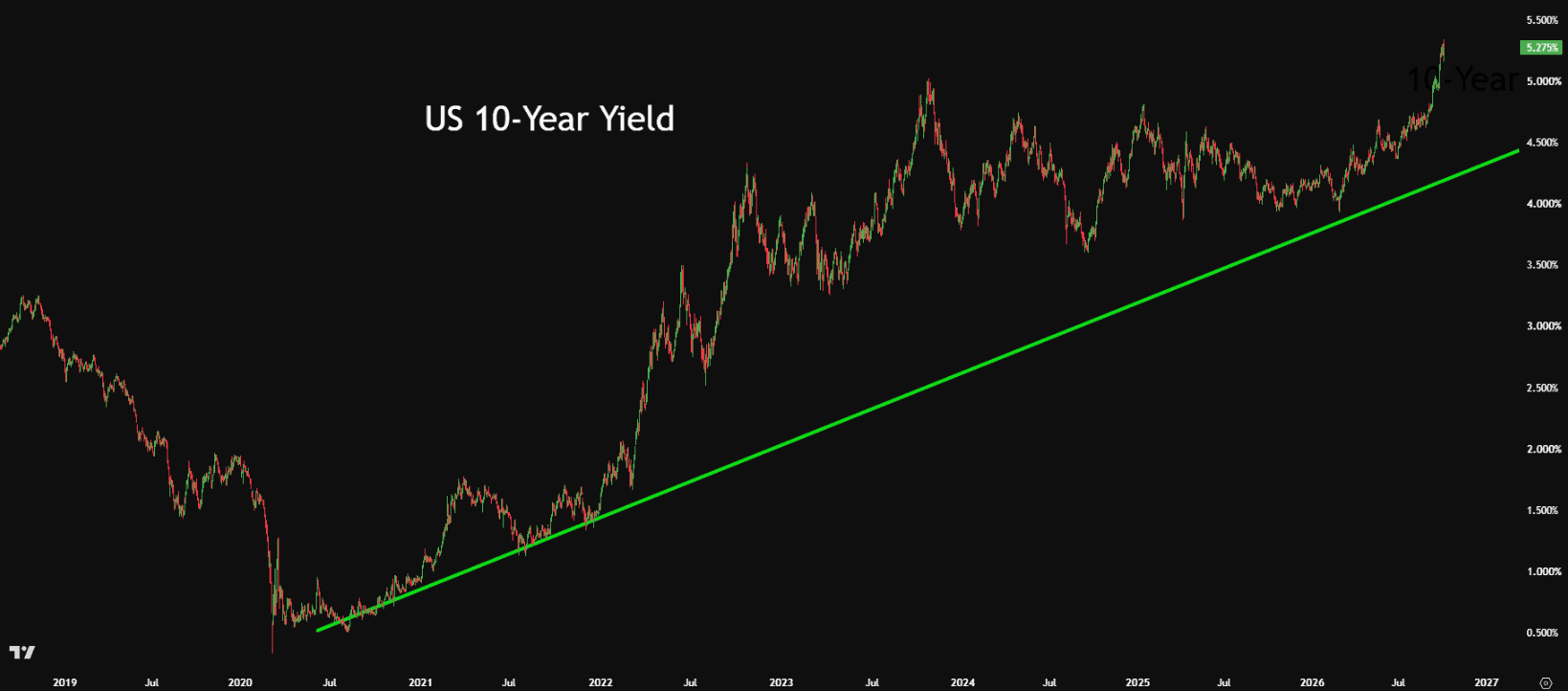
- The link: Higher fuel costs push up inflation. When investors expect more inflation, they demand higher interest rates on bonds.
- Where we are: The US 10-year yield, the interest rate the US government pays to borrow for 10 years, is about 5.28%. That is above the 2023 peak near 5%.
- The other side: High rates eventually slow the economy. Mortgages get more expensive, home sales slow, and spending on renovations and furniture falls. Slower growth cools inflation and tends to bring rates back down. In other words, the cure for high prices is high prices.
Energy stocks are holding up
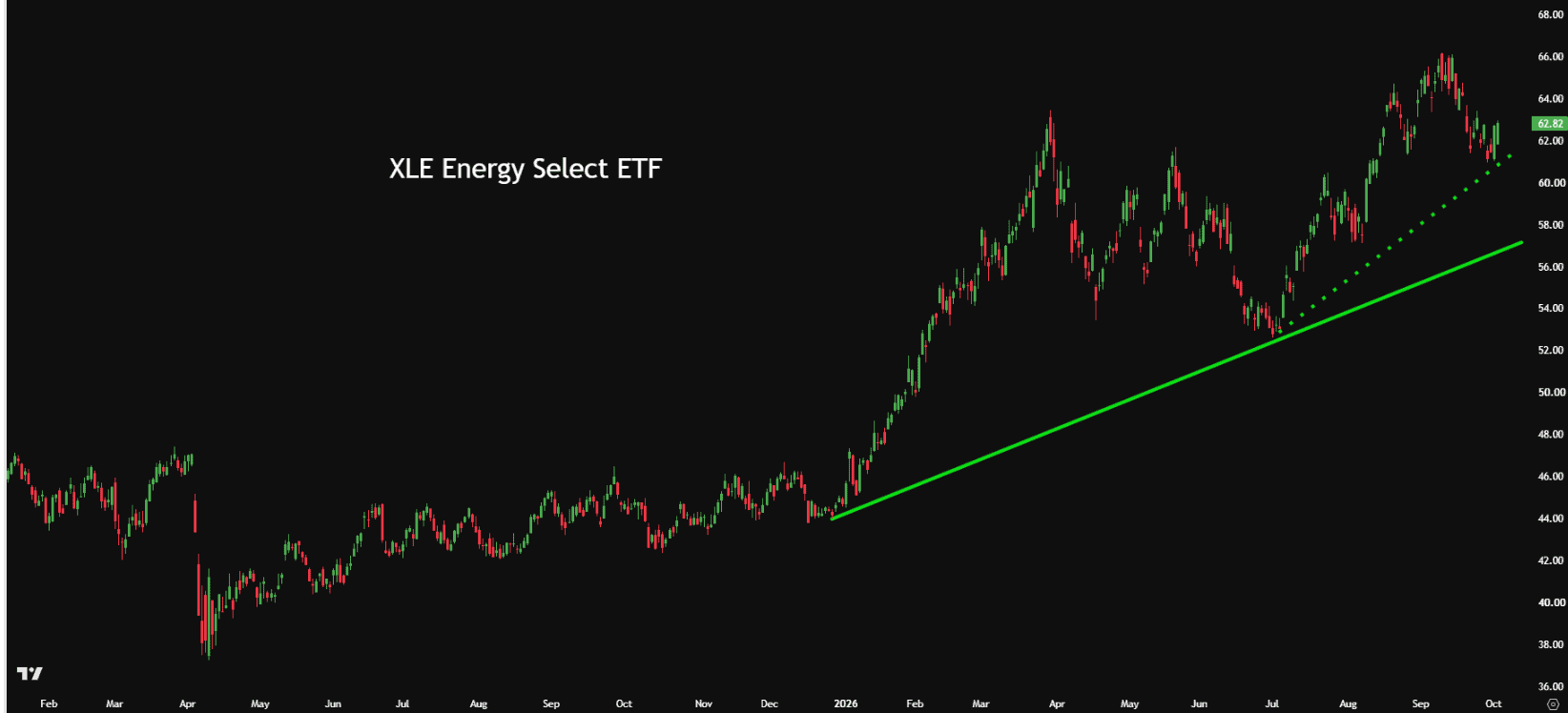
- XLE: In the Trend Letter we own this exchange-traded fund (ETF) that holds the large US energy companies. It pulled back from its September high near $66 and is holding above its short-term trendline (dotted) near $61. The longer-term uptrend from January (solid) sits near $57.
Refiners are leading the energy sector
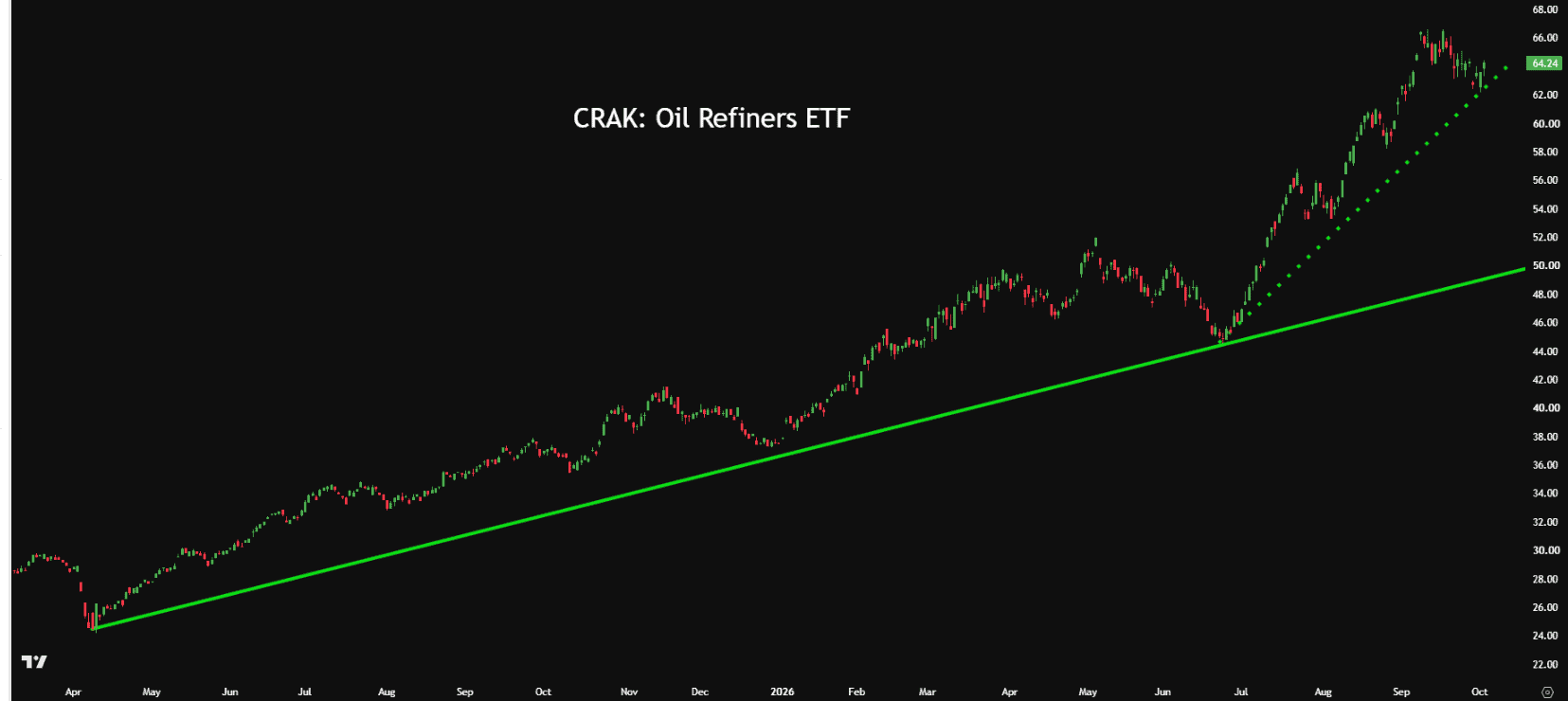
- What it is: The Oil Refiners ETF holds companies that turn crude oil into gasoline, diesel and jet fuel. An ETF (exchange-traded fund) is a basket of stocks you can buy as a single share.
- Why it is rising: Refiners earn the crack spread. When that margin widens, their profits grow.
- What has happened: The ETF has more than doubled since its April 2025 low near $25. Since late June it has climbed from about $45 to about $64.
- What to watch: It has pulled back from its September high near $66 and is sitting right on its short-term trendline (dashed). A close below that line would be the first sign the rally is losing steam. The longer-term uptrend (solid) sits much lower, near $49.
The big picture
- It starts with oil: Fuel prices are the link between the oil market, inflation and interest rates. When fuel costs rise, inflation worries follow, and interest rates tend to rise with them.
- Less of a cushion: The US emergency reserve is at its lowest in more than 40 years, and the G7 is now drawing on its stockpiles too. That leaves less room to hold prices down if oil jumps again.
- Winners and losers: Energy stocks, and refiners in particular, have benefited from higher fuel prices. Bonds have been hurt by them.
- Nothing lasts forever: High prices and high interest rates eventually slow the economy, and that in turn eases the pressure on both.
- What we are watching: The crack spread. A break above $70 would signal more inflation pressure ahead. A drop below its trendline near $58 would be the first sign the G7 release is working.
Stay tuned!
Martin
⏰ Special Discount ends Sunday at midnight
- What is the discount?: Between 38% – 53% off regular prices
- Deadline: The offer expires Sunday, October 4 at midnight.
- How to claim it: 👉Click Here to claim your discount