Why a Bond Market Wobble Matters to AI Stocks (and Gold)
Oct 17, 2026 · @Mart
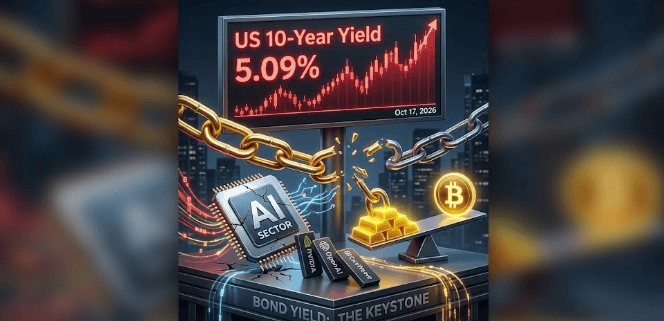
The week in one line: hot inflation data pushed interest rates up, a crack in AI financing knocked tech stocks down, and gold and Bitcoin got caught in the crossfire. These aren’t separate stories. They’re one chain.
Link 1: Government borrowing is pushing rates up
- What a yield is: the yield is the interest rate the US government pays to borrow. The ’10-year yield’ is the rate on a 10-year loan, and it sets the tone for mortgages, business loans and more.
- Where it stands: the 10-year briefly touched 5.32% on Wednesday. That isn’t high by history’s standards, but it’s near the highest in about two decades.
- Why it’s rising: the US adds roughly $2–3 trillion in new debt every year. More borrowing means lenders demand a higher rate to keep lending.
- The twist: the textbook says raising rates cools inflation. But when the government is the biggest borrower, higher rates mean bigger interest bills, which means more government spending and more debt. The cure can feed the disease.
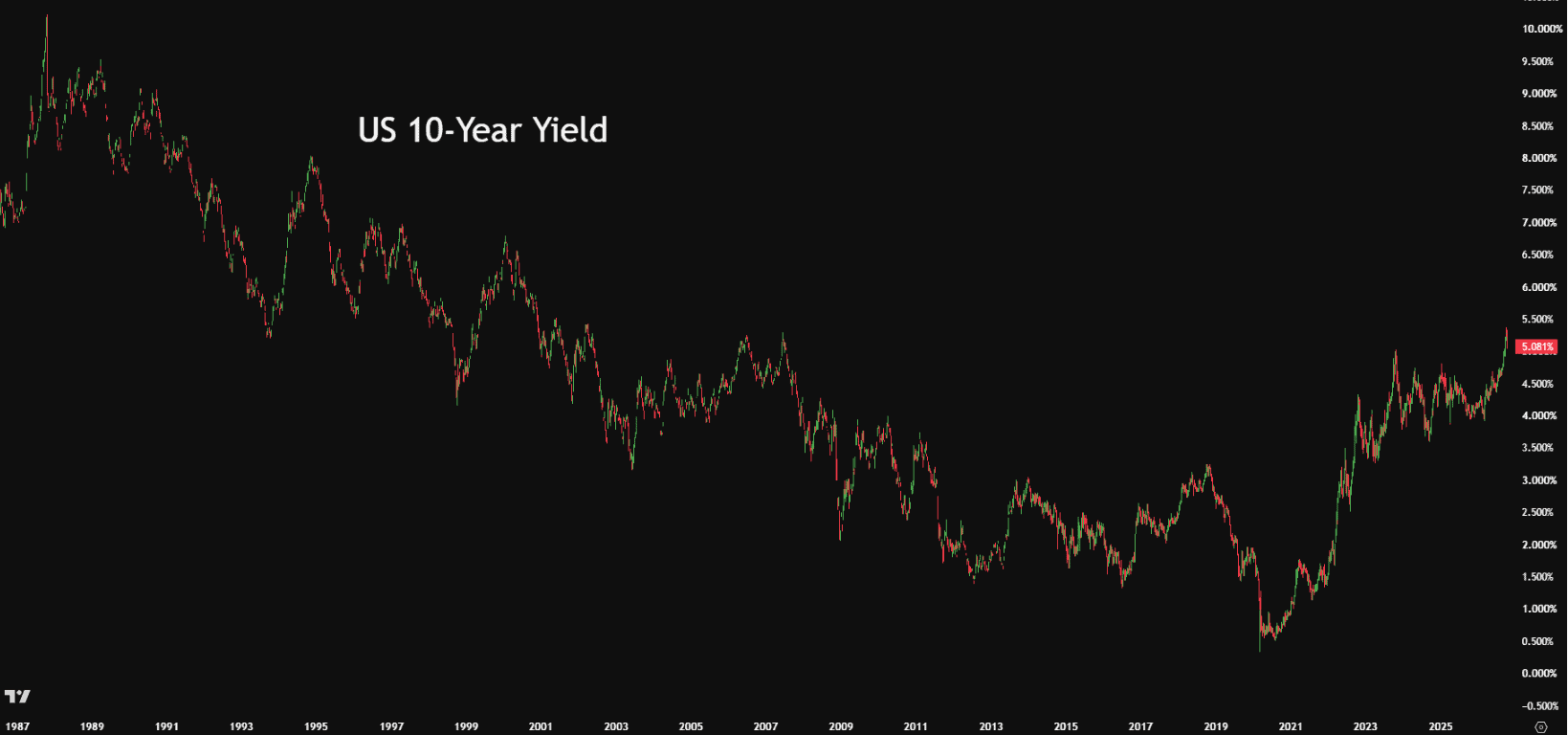
Not high by history’s standards, but the highest in nearly two decades.
Link 2: Higher rates hit ‘future-promise’ stocks hardest
- The idea: a stock’s value is today’s estimate of all the money the company will earn in the future. When rates rise, money promised far in the future is worth less today.
- An analogy: $100 you get next month is nearly as good as $100 today. $100 promised in 10 years is worth much less, especially when you could earn 5% a year in a safe bond meanwhile.
- Why AI is exposed: AI stocks are priced on huge profits years from now, so they get hit harder than steady, pay-you-now businesses.
Link 3: The AI boom runs on borrowed money
- The spending: the big tech platforms are spending hundreds of billions on data centres, and no one has yet shown how they’ll earn a proper return on it.
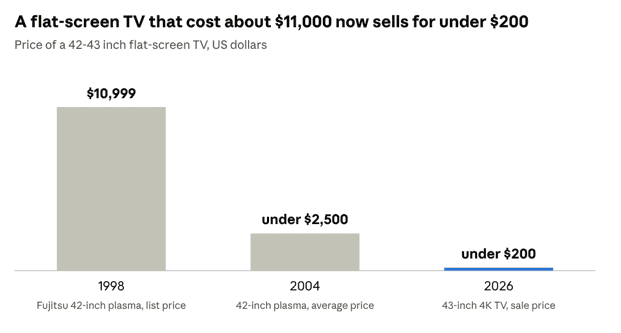
- The treadmill: every new AI model drives down the price of the service. It’s like borrowing billions to build a flat-screen TV factory. The first 42-inch flat-screens sold for about $11,000 in 1998. By 2004 the average price was under $2,500. Today a sharper 43-inch 4K TV sells for under $200. The loan payments stay the same while the price of what you sell keeps falling. And you can’t stop upgrading the factory, or a competitor’s cheaper, better TV takes your customers.
- The canary is CoreWeave: CoreWeave borrows heavily to buy Nvidia chips and rent them out by the hour.
- The cost of insuring its debt against default, called a CDS (credit default swap), more than doubled since June to over 1,000 basis points. That means paying more than 10% a year for the insurance.
- Some of its bonds yielded over 15%, and the stock fell about 23% in two days.
- Why it matters: if a poster child for AI can’t borrow cheaply, the whole AI build-out is questioned.
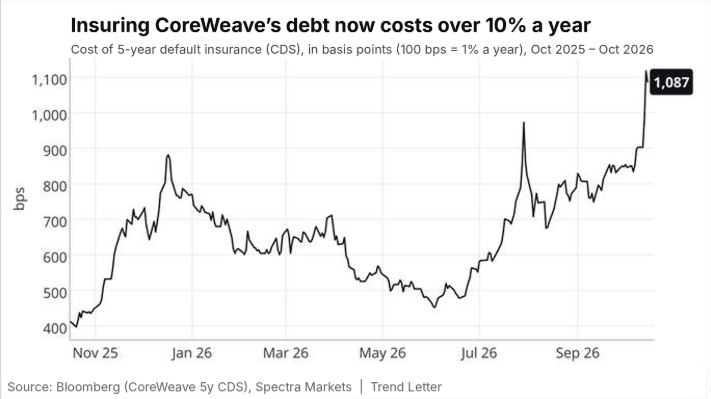
Bond investors now charge more than 10% a year to insure CoreWeave’s debt.
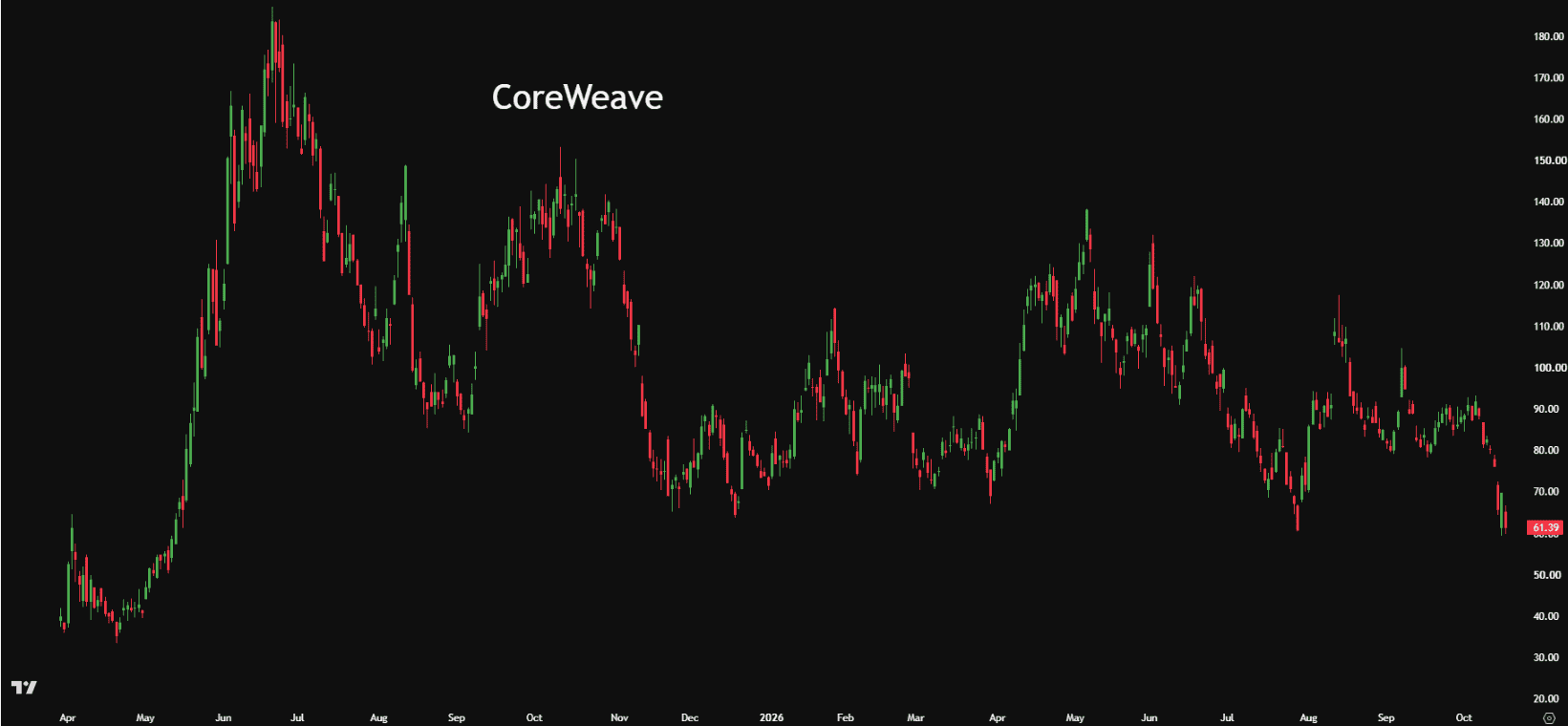
The stock confirmed the warning: down about two-thirds from its 2025 peak near $187 to ~$61, its lowest since May 2025.
Link 4: The dominoes behind CoreWeave
- Nvidia: Nvidia owns about 10% of CoreWeave and helps finance it. It’s like a company lending to its own customers so they can keep buying from it. If CoreWeave stumbles, Nvidia either spends more to prop it up or takes the hit. Neither is good.
- OpenAI: OpenAI has cut its spending target from $1.4 trillion to about $600 billion through 2030, but that’s still far more than its own earnings can cover. One industry expert puts its odds of failure at 40%. That’s an opinion, but it’s a serious one.
- Why it matters to your index fund: a handful of AI-linked companies now make up a big share of the stock market. A stumble there is a stumble for the S&P 500.
Link 5: Then why did rates fall at the end of the week?
- Fear beat inflation: CPI, the main measure of consumer prices, came in at 3.7% versus 3.6% expected. PPI, which tracks what producers pay, hit 6.3% versus 5.3% expected. Normally that pushes rates up.
- The rush to safety: instead, the AI scare sent investors fleeing stocks into US government bonds, which are seen as the safest place to park money. Heavy buying pushes yields down. The 10-year ended Thursday near 5.09%.
- No help from the Fed: Fed Chair Kevin Warsh gave no hints ahead of the Oct 27–28 rate meeting.
- The takeaway: rates can fall for bad reasons, like fear, not just good ones.
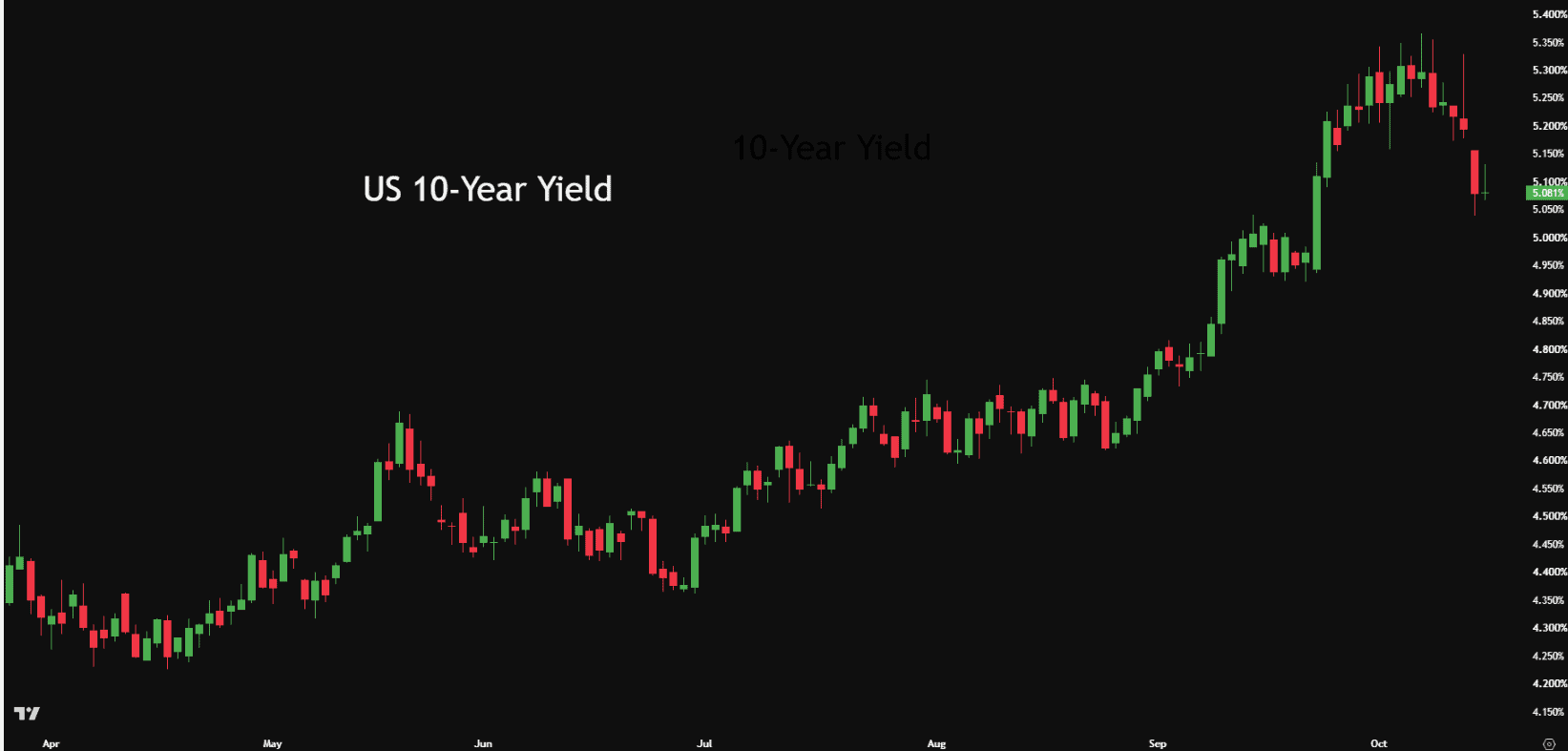
Fear beat inflation: yields fell this week despite hot CPI and PPI.
Link 6: Gold and Bitcoin, a tug-of-war
- Short term, yields win: gold and Bitcoin pay no interest. When bonds pay 5%, holding them costs you more in lost interest, so they dipped on the hot inflation news.
- Long term, debasement wins: governments that overspend create more money, so each dollar buys less over time. That’s what ‘debasement’ means. It takes more of those dollars to buy scarce assets, which is why we own gold and Bitcoin for the long haul.
- Bitcoin marches to its own drum: since June, gold has slipped about 5% as yields climbed, but Bitcoin is still up about 12%. It has its own drivers, so it doesn’t always follow the pattern.
- The short version: in trading, watch yields. For investing, watch the money supply.
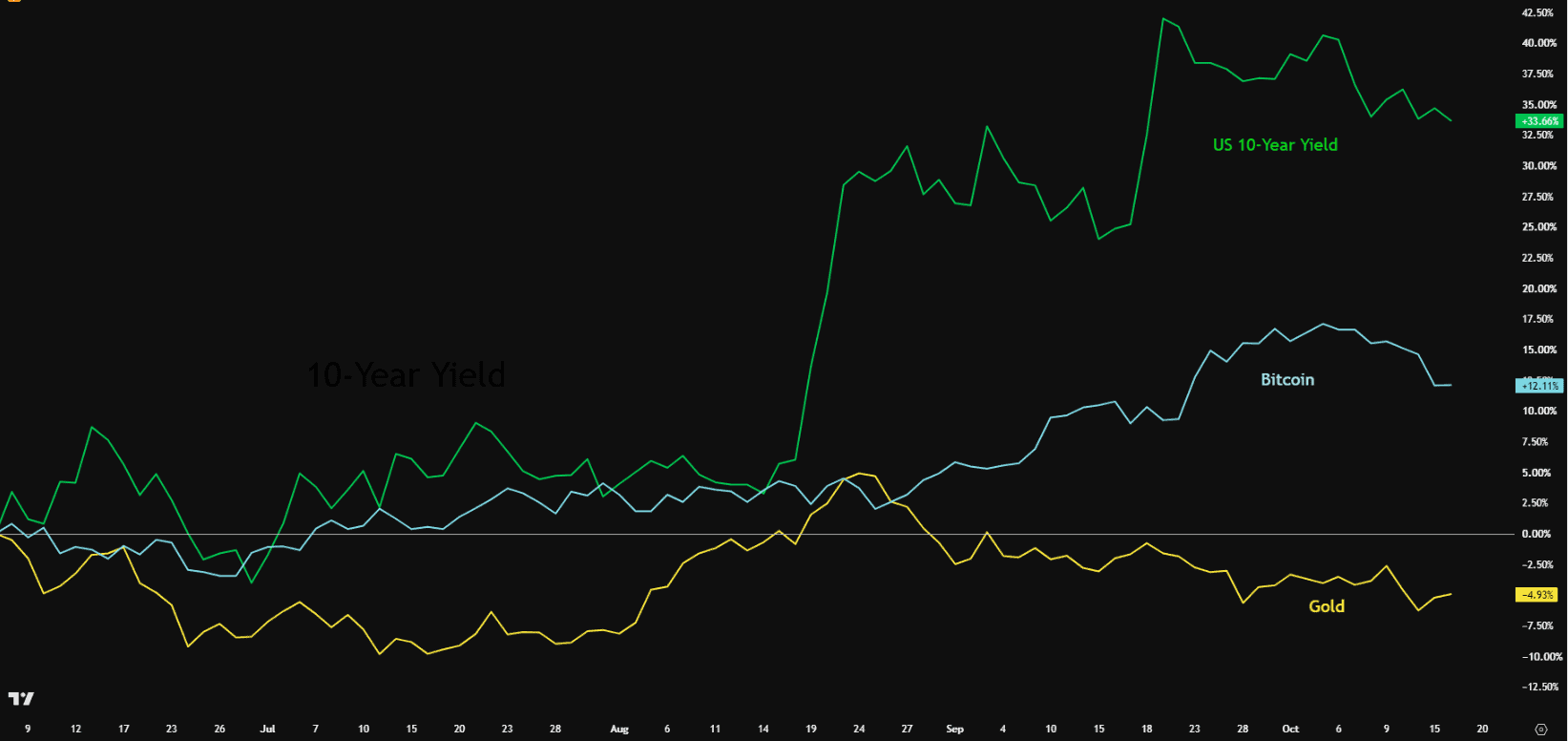
Since June: yields up, gold down, Bitcoin up. The tug-of-war in one picture.
Bottom line
Rising government debt pushes rates up. Higher rates squeeze companies that depend on borrowing and on far-off profits, and AI is the biggest of those. CoreWeave is the first visible crack. Watch its debt markets and the 10-year yield, because they’ll tell you before stock prices do.